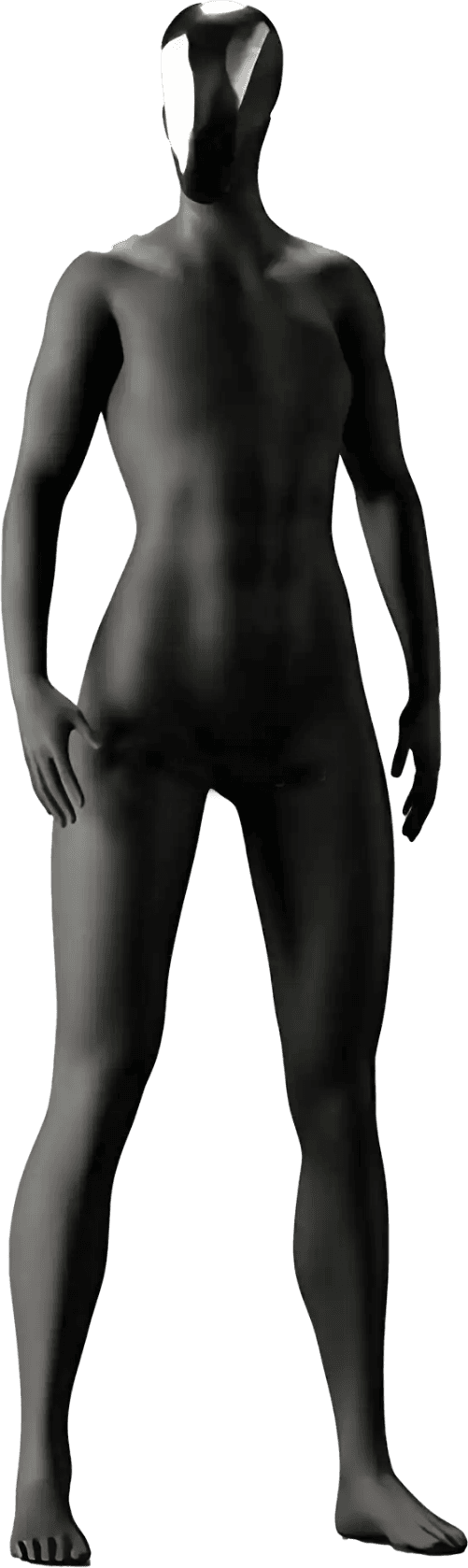
Clone Robotics' Clone Alpha represents one of the most ambitious approaches to humanoid robotics: replicating human anatomy rather than merely mimicking human form. The Polish company's design integrates synthetic organs and artificial muscles to create a robot that moves like a biological system.
Standing approximately 170 cm tall, Clone Alpha features a musculoskeletal structure with 206 artificial bones, matching human anatomy. The robot's Myofiber artificial muscle technology, pioneered by Clone in 2021, actuates the skeleton by attaching musculotendon units to anatomically accurate bone attachment points.
Myofiber units achieve exceptional performance: response times under 50 milliseconds, over 30% unloaded contraction, and contraction forces of at least 1 kg for a 3-gram fiber. The upper torso alone offers 164 degrees of freedom, 20 in the shoulder, 6 per vertebra in the spine, and 26 in the hand, wrist, and elbow.
The robot's hydraulic vascular system uses water pressure to contract muscles, powered by a compact 500-watt pump. Four depth cameras, 70 inertial sensors, and 320 pressure sensors provide proprioceptive and visual feedback for precise muscle control. Clone Robotics is taking preorders for 279 production units, though the complete integrated system has yet to be publicly demonstrated. The approach represents a fundamental bet that bio-inspired design will ultimately outperform traditional robotics architectures.